
Key takeaways
- Air source heat pumps are usually simpler to site because they do not need ground loops or boreholes.
- Ground source heat pumps can be very efficient where ground works and budget suit the project.
- The right answer depends on heat loss, land, plant space, planning, budget and long-term use.
The right heat pump depends on the project
Air source vs ground source heat pumps is not a one-size choice. Both can provide efficient renewable heating and hot water, but they suit different sites, budgets and build programmes.
This guide is for homeowners, self-builders and developers who want a fair comparison before committing to a design. The best answer comes after heat loss, site constraints, plant space, outdoor space, ground conditions and hot water demand have been checked.
Quick comparison
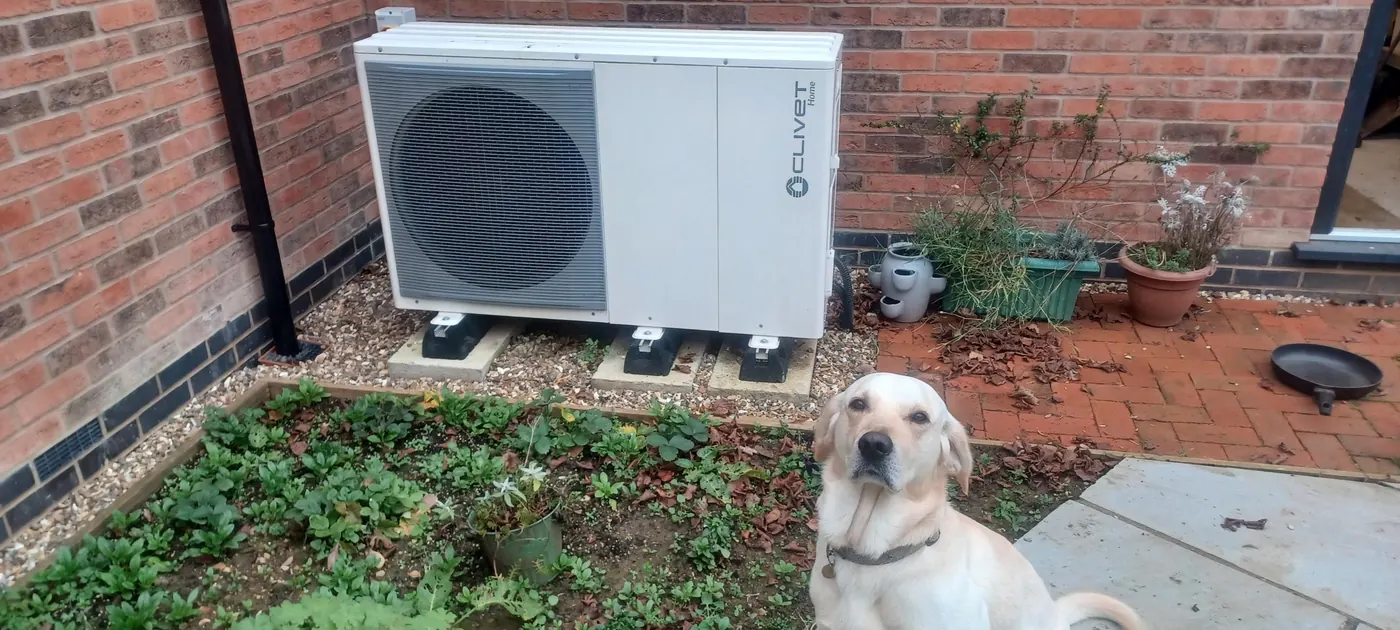
Air source heat pumps collect heat from outside air through an outdoor unit. Ground source heat pumps collect heat from the ground using buried loops or boreholes and usually have an indoor heat pump unit.
A simple way to think about it: air source often has easier installation logistics, while ground source can suit projects where ground works are already part of the plan.
| Factor | Air source heat pump | Ground source heat pump |
|---|---|---|
| Heat source | Outside air | Ground loops or boreholes |
| Outdoor works | Outdoor unit and base | Trenches or boreholes |
| Plant space | Outdoor unit plus indoor cylinder/plant | Indoor heat pump plus cylinder/plant |
| Noise | Outdoor fan noise must be considered | No outdoor fan unit |
| Best fit | Many homes and retrofits | Larger plots, new builds and suitable ground works |
When air source heat pumps fit well
Air source heat pumps are the most common domestic heat pump type in the UK. They can suit many homes because the installation does not require ground loops or boreholes. The outdoor unit still needs careful siting for airflow, service access, appearance and noise.
They work particularly well when the water-based heating system is designed for lower temperatures: suitable radiators, UFH, good controls and proper commissioning.
- Often simpler for existing homes.
- No ground loop field required.
- Outdoor unit location needs careful thought.
- Performance still depends on emitter and control design.
When ground source heat pumps fit well
Ground source heat pumps can be a strong option where a project has the land, budget and build programme for ground loops or boreholes. The ground temperature is more stable than outdoor air, which can support good seasonal performance when the system is designed correctly.
They are often considered on larger properties, new builds, rural sites and projects where ground works are already planned. The design needs to account for collector sizing, ground conditions, plant space and long-term access.
- No outdoor fan unit.
- Can suit larger or long-term projects.
- Ground works need proper design and budget.
- Indoor plant space must be planned early.
Cost factors without guessing prices
It is tempting to ask which type is cheaper, but the honest answer depends on site conditions. Air source systems usually avoid the cost of ground loops or boreholes. Ground source systems can need more upfront work but may offer strong efficiency where the project suits them.
Rather than using generic price claims, compare the complete installed design: heat pump, cylinder, emitters, controls, pipework, ground works, electrical work, commissioning and future servicing.
Which should you choose?
Choose air source if you want a practical route for many homes and you have a sensible outdoor unit location. Choose ground source if the land, ground works and plant strategy fit the project and you want to assess long-term performance potential.
For either type, the design quality is the deciding factor. A well-designed air source system will usually beat a poorly designed ground source system, and the reverse is also true.
The best first step is a project review, not a product choice.
Frequently asked questions
Are ground source heat pumps more efficient than air source heat pumps?
Ground source systems can achieve strong seasonal performance because ground temperatures are more stable, but real efficiency depends on design, ground loop sizing, emitters, flow temperature and commissioning.
Do air source heat pumps work in cold weather?
Modern air source heat pumps can work in cold weather, but output and efficiency depend on the unit, outdoor temperature and heating system design. Correct sizing and low-temperature emitters matter.
Which heat pump is better for a new build?
Both can suit new builds. Air source may be simpler, while ground source may suit larger plots or projects already doing ground works. The choice should follow heat loss and site design.